In the shadow of global outbreaks, a scientific discipline once confined to academic circles has surged to the forefront of public health defense: phylogeography. By marrying the evolutionary history of pathogens with their geographical spread, researchers are now reconstructing the hidden journeys of viruses with unprecedented clarity, turning genetic code into a powerful narrative of outbreak dynamics.
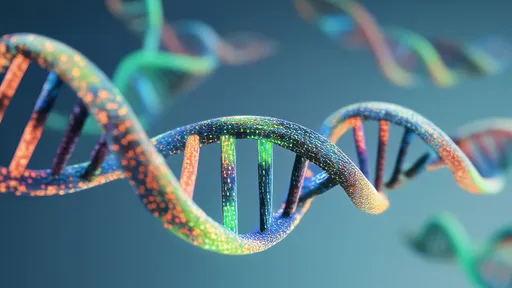
The foundation of this approach lies in the virus itself. Unlike static entities, viruses mutate as they replicate. Most mutations are inconsequential, but they act as genetic mile markers. When scientists sequence the genome of a virus sampled from a patient, they are capturing a snapshot of its evolutionary state. By comparing these sequences from different individuals across various locations and times, they can build a family tree, known as a phylogenetic tree. This tree reveals which samples are closely related and, by inference, which infections are likely part of the same transmission chain.
Phylogeography takes this a critical step further. It overlays the geographical data of where each sample was collected onto the branches of the phylogenetic tree. Sophisticated statistical models then infer the most probable migration paths of the virus. It answers not just the "when" of an outbreak, but the "where from" and "how." Was the virus introduced to a new city by a single traveler or through multiple independent events? Did it spread silently within a community for weeks before being detected? These are the questions phylogeography is uniquely equipped to answer.
The real-world impact of this science was starkly demonstrated during the COVID-19 pandemic. In early 2020, as the novel coronavirus seeped across borders, traditional contact tracing was quickly overwhelmed. Phylogeographic analyses provided a macro view of the pandemic's spread. Studies meticulously reconstructed the exportation of lineages from major hubs like Wuhan and later, how variants of concern like Alpha and Delta dominated regional epidemics through their competitive advantage. This intelligence was crucial for governments implementing targeted travel restrictions and allocating resources.
Beyond mapping spread, phylogeography serves as a forensic tool to validate or refute transmission narratives. It can identify superspreading events, where a single individual infects a disproportionately large number of people, by showing a large cluster of cases with nearly identical genomes emerging from a single point. Conversely, it can exonerate suspected sources; if the virus from a suspected index case is on a different branch of the tree than a local cluster, the true source must lie elsewhere. This precision brings a new level of accountability and understanding to outbreak investigation.
The methodology is not without its challenges and limitations. The accuracy of any phylogeographic reconstruction is entirely dependent on the quality and quantity of the data. Biased sampling—where sequences are abundant from some regions and absent from others—can paint a misleading picture, suggesting travel routes that are merely artifacts of uneven surveillance. Furthermore, the models make assumptions about evolutionary rates and population dynamics. While robust, these are simplifications of complex biological processes, and conclusions must always be presented with appropriate statistical confidence.
Looking ahead, the future of phylogeography is one of integration and acceleration. The field is rapidly moving towards real-time analytics, aiming to provide actionable insights while an outbreak is still unfolding, not months later. This involves creating automated pipelines that can intake new viral sequences, update phylogenetic trees, and run spatial models近乎 continuously. The goal is to have a living, breathing map of a pathogen's movement, empowering public health officials to make proactive, rather than reactive, decisions.
Furthermore, researchers are beginning to incorporate additional layers of data to enrich these models. Information on airline passenger flow, ground transportation networks, and even climate data can be fed into the algorithms to create more realistic models of how humans, and thus viruses, move. This creates a powerful synergy between big data and genomics, building a more holistic understanding of epidemic spread.
In conclusion, phylogeography has evolved from a theoretical niche into an indispensable pillar of modern epidemiology. It transforms the silent history written in a virus's genome into a dynamic story of its spread across the globe. As sequencing technology becomes faster and cheaper, and analytical models grow more sophisticated, our ability to track, predict, and ultimately preempt the paths of pandemics will only strengthen, offering a brighter outlook for global health security.

By /Aug 27, 2025
By /Aug 27, 2025
By /Aug 27, 2025
By /Aug 27, 2025

By /Aug 27, 2025
By /Aug 27, 2025
By /Aug 27, 2025

By /Aug 27, 2025
By /Aug 27, 2025
By /Aug 27, 2025
By /Aug 27, 2025

By /Aug 27, 2025
By /Aug 27, 2025

By /Aug 27, 2025
By /Aug 27, 2025
By /Aug 27, 2025

By /Aug 27, 2025

By /Aug 27, 2025

By /Aug 27, 2025
By /Aug 27, 2025
