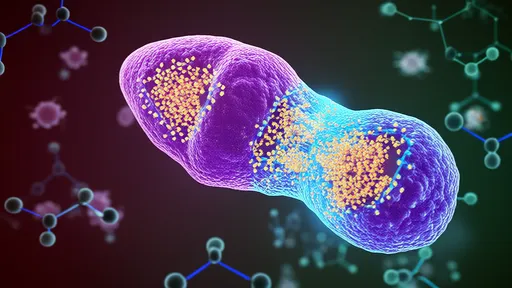
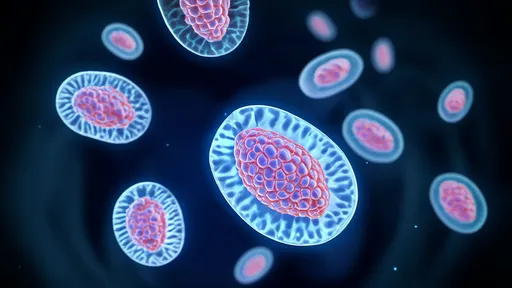
In the intricate world of cellular biology, mitochondria stand as dynamic powerhouses, far from the static structures once imagined. Their continuous reshaping through fusion and fission processes not only defines their morphology but also intricately regulates cellular metabolism. This dance of organelles is a sophisticated response to the cell's energetic demands, stress signals, and overall physiological state.
Mitochondrial fusion involves the merging of outer and inner membranes of adjacent mitochondria, creating elongated networks. This process is mediated by key GTPase proteins: mitofusins 1 and 2 (Mfn1/2) facilitate outer membrane fusion, while optic atrophy 1 (OPA1) manages inner membrane fusion. Fusion allows mitochondria to share contents such as mitochondrial DNA (mtDNA), proteins, and metabolites, promoting genetic complementation and functional homogeneity. It enhances oxidative phosphorylation efficiency by distributing energy-producing components evenly, thus supporting ATP production under stable conditions. Moreover, fused networks buffer against stress by diluting damaged components, maintaining metabolic stability.
Conversely, mitochondrial fission divides mitochondria into smaller, discrete units. Driven by the cytosolic GTPase dynamin-related protein 1 (Drp1), which is recruited to the outer mitochondrial membrane by adaptor proteins like Fis1, Mff, and MiD49/51, fission facilitates the segregation of impaired mitochondria. This isolation is crucial for quality control; damaged parts can be targeted for mitophagy, preventing the propagation of dysfunction. Fission also enables the distribution of mitochondria to areas of high energy demand within the cell, such as synapses in neurons or contracting regions in muscle cells. During increased metabolic needs or stress, fission boosts glycolysis by producing fragmented mitochondria that favor anaerobic pathways, offering metabolic flexibility.
The balance between fusion and fission—often termed mitochondrial dynamics—directly influences cellular metabolism. Fused mitochondrial networks optimize ATP production via efficient electron transport chain activity, suited for nutrient-rich conditions. In contrast, fission promotes metabolic shift toward glycolysis, useful under hypoxia or nutrient scarcity. Dysregulation of this balance is linked to metabolic diseases; excessive fission is observed in obesity and type 2 diabetes, contributing to insulin resistance, while excessive fusion can impair metabolic adaptability. Additionally, dynamics affect reactive oxygen species (ROS) levels: fused mitochondria reduce ROS production, whereas fission can increase it, further modulating metabolic signaling pathways.
Beyond mere energy regulation, mitochondrial dynamics play a pivotal role in apoptosis, calcium signaling, and overall cellular health. The interplay between fusion and fission proteins is regulated by post-translational modifications, such as phosphorylation and ubiquitination, and integrates inputs from cellular energy sensors like AMPK and mTOR. These mechanisms ensure that mitochondrial shape and function adapt to metabolic cues, highlighting dynamics as a central hub in cellular decision-making.
Understanding the mechanistic links between mitochondrial dynamics and metabolism opens avenues for therapeutic interventions. Targeting fusion or fission proteins could ameliorate metabolic disorders, cancer, and neurodegenerative diseases, where mitochondrial dysfunction is a hallmark. As research advances, the narrative of mitochondria as dynamic metabolic integrators continues to evolve, emphasizing their profound impact on health and disease.

By /Aug 27, 2025
By /Aug 27, 2025
By /Aug 27, 2025

By /Aug 27, 2025

By /Aug 27, 2025
By /Aug 27, 2025
By /Aug 27, 2025

By /Aug 27, 2025
By /Aug 27, 2025
By /Aug 27, 2025
By /Aug 27, 2025

By /Aug 27, 2025

By /Aug 27, 2025

By /Aug 27, 2025
By /Aug 27, 2025
By /Aug 27, 2025

By /Aug 27, 2025
By /Aug 27, 2025

By /Aug 27, 2025
By /Aug 27, 2025
