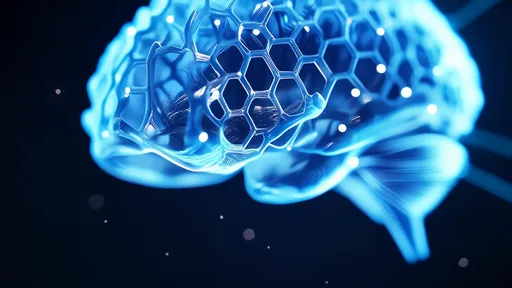
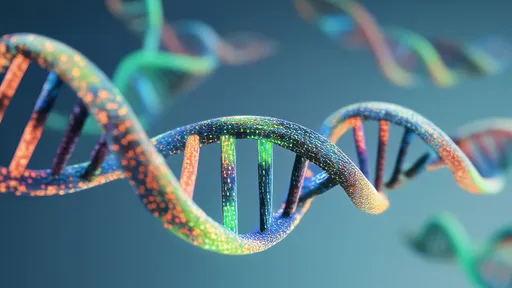
In a landmark achievement that could redefine the future of data storage, scientists have successfully leveraged the molecular architecture of DNA to achieve zettabyte-scale storage density through precisely engineered deoxyribonucleic acid lattices. This breakthrough represents not merely an incremental improvement but a quantum leap in our capacity to preserve information, potentially solving the looming global data storage crisis as traditional silicon-based technologies approach their physical limits.
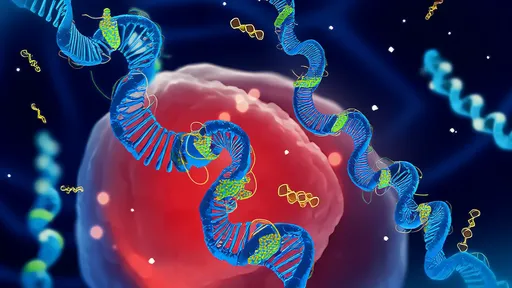
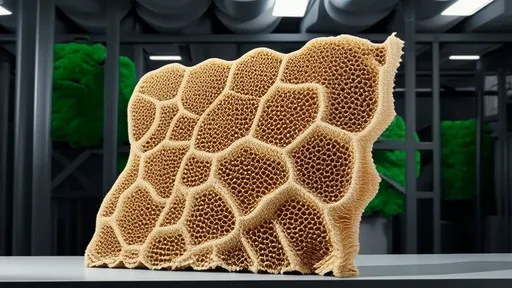
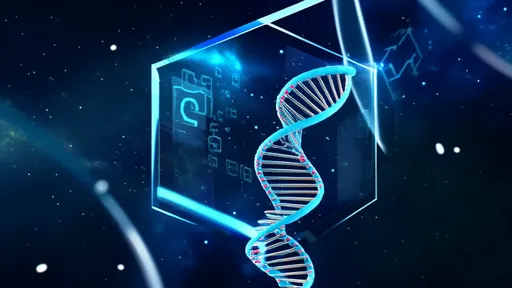
The research team developed a revolutionary approach by organizing synthetic DNA strands into highly stable crystalline lattice structures capable of storing digital information at unprecedented densities. Where current cutting-edge data centers require football-field-sized facilities to store exabytes of information, equivalent amounts could theoretically be preserved in a volume no larger than a sugar cube using this DNA lattice technology. The implications for archival storage, particularly for humanity's most valuable cultural, scientific and historical records, are nothing short of revolutionary.
What makes this development particularly remarkable is the implementation of error-correction algorithms specifically designed for the biochemical environment of DNA storage. Previous attempts at DNA data storage struggled with retrieval accuracy and degradation over time, but the lattice approach demonstrates exceptional stability and fidelity, with researchers reporting error rates lower than many conventional storage systems after accelerated aging tests equivalent to centuries of storage.
The process begins with converting digital files—whether text, images, or complex databases—into the genetic alphabet of adenine, thymine, cytosine and guanine. Specialized algorithms then optimize this genetic code for stability and efficient retrieval before synthesizing the actual DNA strands. These strands are then assembled into their protective lattice configuration, creating what researchers describe as "molecular libraries" that can be read using next-generation sequencing technology when the information needs to be accessed.
Perhaps the most compelling advantage of DNA as a storage medium lies in its durability. While magnetic tapes degrade within decades and hard drives within years, properly preserved DNA can maintain its integrity for thousands of years—as evidenced by our ability to sequence genetic material from ancient specimens. This extraordinary longevity, combined with unimaginable density, positions DNA storage as the ultimate solution for preserving human knowledge for future generations.
Commercial implications are already beginning to materialize, with several biotechnology and data storage firms announcing strategic partnerships with the research institutions behind this breakthrough. Industry analysts project that while initial implementations will focus on government and institutional archives where long-term preservation justifies premium costs, the technology will eventually follow the familiar trajectory of exponential cost reduction that characterized the digital revolution.
The environmental impact could be equally transformative. Traditional data storage consumes enormous amounts of energy for both operation and cooling, accounting for approximately 1-2% of global electricity consumption. DNA archives require no energy input once stored, potentially reducing the carbon footprint of data preservation by orders of magnitude while simultaneously addressing the physical space constraints facing today's expanding data centers.
Despite the excitement surrounding this achievement, researchers caution that significant challenges remain before widespread adoption becomes practical. The current costs of DNA synthesis and sequencing, while falling rapidly, remain prohibitive for all but the most critical applications. Additionally, the speed of data writing and retrieval, though improving, still lags far behind electronic systems, making the technology better suited for archival purposes than active data processing.
Looking toward the future, the research team is already working on next-generation innovations that could address these limitations. Their roadmap includes developing more efficient synthesis techniques, improving random-access capabilities to allow retrieval of specific data segments without sequencing entire libraries, and creating standardized formatting protocols that would ensure interoperability across different DNA storage systems.
This breakthrough stands as a testament to the power of interdisciplinary collaboration, combining insights from molecular biology, computer science, materials engineering and information theory. As one senior researcher noted, "We're not just storing data in DNA—we're learning to speak the language of life itself to preserve the language of human achievement." The convergence of biological and digital technologies represented by this achievement suggests we are entering a new era where the distinction between biological and technological information systems becomes increasingly blurred.
The scientific community has responded with enthusiastic anticipation to these published results, with many experts comparing this moment to the early developments of semiconductor technology that ultimately gave rise to the digital age. As research institutions and commercial entities worldwide expand their investments in molecular information storage, what once seemed like science fiction is rapidly becoming scientific reality—with implications that will resonate for centuries to come.
By /Aug 27, 2025
By /Aug 27, 2025
By /Aug 27, 2025
By /Aug 27, 2025

By /Aug 27, 2025
By /Aug 27, 2025
By /Aug 27, 2025

By /Aug 27, 2025
By /Aug 27, 2025
By /Aug 27, 2025
By /Aug 27, 2025

By /Aug 27, 2025
By /Aug 27, 2025

By /Aug 27, 2025
By /Aug 27, 2025
By /Aug 27, 2025
By /Aug 27, 2025
By /Aug 27, 2025

By /Aug 27, 2025
By /Aug 27, 2025
