In the crushing darkness of the deep sea, where pressures mount to levels that would obliterate most life forms, the hadal snailfish glides with an almost contemptuous ease. This ghostly, pale creature, dwelling at depths exceeding 6,000 meters, represents one of biology's most profound enigmas. Its very existence challenges our fundamental understanding of biochemistry and physiology, posing a critical question: how does life not only survive but functionally thrive under such extreme conditions? The answer, scientists are discovering, lies not in some exotic external shield, but deep within the very fabric of its being—its muscles.
The deep ocean is the planet's final frontier, a realm of perpetual night, sub-zero temperatures, and, most critically, immense hydrostatic pressure. For every 10 meters of descent, pressure increases by one atmosphere. At the depths these snailfish call home, the pressure is over 600 times greater than at the surface, equivalent to the weight of an elephant balanced on a postage stamp. This force is ruthlessly efficient at denaturing proteins, disrupting cell membranes, and crippling the molecular machinery essential for life. Most enzymes, the workhorses of cellular function, simply cease to operate correctly under such duress. For a vertebrate like the snailfish, which must move, hunt, and reproduce, the greatest challenge is maintaining the contractile function of its skeletal muscle—the engine of locomotion. The failure of this system would mean certain death, yet the snailfish's muscle performance remains remarkably unscathed.
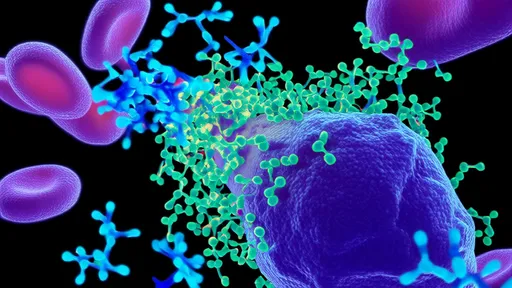
This resilience is no accident of nature but the product of millions of years of meticulous evolutionary refinement. Researchers delving into the genome and proteome of these hadal creatures have uncovered a sophisticated multi-layered strategy for pressure defense. Unlike shallow-water fish that rely on a compound called trimethylamine N-oxide (TMAO) as a sole protective agent, the snailfish employs a broader, more integrated chemical arsenal. Its cells are saturated with a unique blend of piezolytes—small, organic molecules specifically adapted to counteract pressure's destructive effects. These piezolytes act as molecular chaperones, swarming around proteins and lipids to stabilize their three-dimensional structures. They prevent the pressure from forcing proteins to unfold and stop cell membranes from becoming rigid and impermeable. This biochemical cocktail ensures that the enzymes crucial for energy production continue to function, supplying the ATP needed to power muscle contractions even in the abyssal plain.
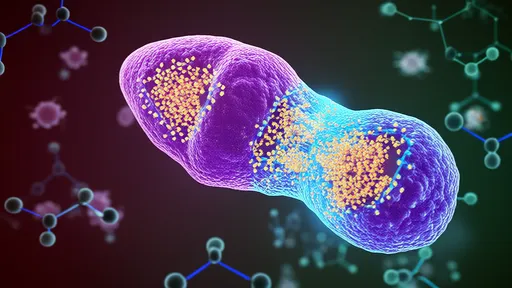
The adaptation extends beyond chemistry into the very architecture of the muscle cells themselves. The snailfish's skeletal muscle exhibits a strikingly high density of mitochondria, the powerhouses of the cell. This is a direct adaptation to the heightened energy demands of operating under pressure. Furthermore, the proteins that constitute the muscle fibers themselves—actin, myosin, and titin—display subtle but critical amino acid substitutions. These genetic tweaks alter the physical properties of the proteins, making them inherently more stable and less prone to pressure-induced deformation. It is a profound example of evolution writing a new recipe for life using the same basic ingredients, tweaking the formula for an extreme environment.
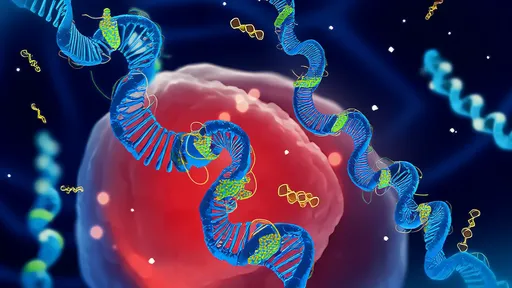
Perhaps the most fascinating aspect of this adaptation is its holistic nature. The snailfish's pressure defiance is not governed by a single master gene or a solitary miracle molecule. Instead, it is a symphony of coordinated changes across its entire biological system—from its genome to its metabolome. Studies comparing hadal snailfish to their shallow-water cousins reveal significant differences in the expression of hundreds of genes related to energy metabolism, muscle structure, and cellular stress response. This suggests a whole-body rewiring, a comprehensive genetic reprogramming for a life under pressure. The creature’s flabby, gelatinous body, a stark contrast to the firm musculature of surface fish, is itself an adaptation; it is mostly water and lacks a swim bladder, making it nearly incompressible and neutrally buoyant, thus reducing the energetic cost of fighting the immense weight of the ocean above it.
The implications of this research ripple far beyond marine biology. Understanding how the snailfish stabilizes its proteins under extreme pressure provides a new toolkit for biomedical science. It offers novel strategies for preserving biological samples, organs for transplant, and sensitive pharmaceuticals that are notoriously vulnerable to degradation. The principles learned could lead to the development of new stabilizers that mimic the snailfish's piezolytes, allowing vaccines and enzymes to be stored without refrigeration—a potential revolution for medicine in remote and developing regions. Moreover, it forces a expansion of our perspective on the limits of life, fueling the astrobiological search for organisms that might exist in the high-pressure environments of watery exoplanets like Jupiter's moon Europa.
In the end, the hadal snailfish is more than a curiosity; it is a testament to life's relentless ingenuity. It embodies a truth that scientists are only beginning to appreciate: that life can craft solutions to seemingly insurmountable physical challenges through gradual, persistent innovation. Its skeleton muscle, functioning flawlessly in a world of incredible force, stands as a powerful symbol of adaptation. It reminds us that the deep sea is not a lifeless desert but a repository of biological wonders, each holding secrets that challenge our assumptions and inspire our own technological aspirations. The snailfish's success is a deep-sea miracle, written in the language of biochemistry and coded in its very muscles.

By /Aug 27, 2025
By /Aug 27, 2025
By /Aug 27, 2025

By /Aug 27, 2025

By /Aug 27, 2025

By /Aug 27, 2025
By /Aug 27, 2025

By /Aug 27, 2025

By /Aug 27, 2025
By /Aug 27, 2025

By /Aug 27, 2025

By /Aug 27, 2025
By /Aug 27, 2025
By /Aug 27, 2025

By /Aug 27, 2025
By /Aug 27, 2025

By /Aug 27, 2025

By /Aug 27, 2025

By /Aug 27, 2025
By /Aug 27, 2025
