The origin of biological homochirality remains one of the most profound mysteries at the intersection of chemistry, physics, and biology. While most biochemical molecules exist in two mirror-image forms, life on Earth overwhelmingly prefers one—a phenomenon known as homochirality. The question of how this uniform handedness emerged from an ostensibly racemic prebiotic world has puzzled scientists for decades. Among the various hypotheses proposed, the amplification of asymmetry through polarized light synthesis presents a particularly elegant and experimentally supported mechanism.
Chirality, derived from the Greek word for hand, refers to the geometric property of a molecule that cannot be superimposed on its mirror image. These enantiomers, though chemically identical in an achiral environment, behave differently in chiral contexts—most notably within biological systems. The homochirality of amino acids and sugars is fundamental to the structure and function of biomolecules like proteins and nucleic acids. A breakdown in this molecular symmetry is, in fact, essential for life as we know it. The puzzle, therefore, lies in how a slight initial bias could have been amplified to near-perfect homogeneity across the entire biosphere.
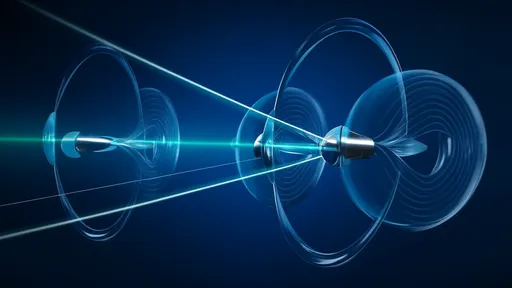
The concept of asymmetric synthesis using circularly polarized light (CPL) offers a compelling solution. CPL is a form of light whose electric field vector rotates either clockwise (right-handed) or counterclockwise (left-handed) as it propagates. This chiral character allows it to interact differently with the two enantiomers of a racemic mixture. When such light passes through or reacts with a chiral molecule, one enantiomer will absorb it more strongly than the other—a phenomenon known as circular dichroism. This differential absorption can lead to a selective photochemical reaction or even the destruction of one enantiomer over the other, thereby creating a small but significant enantiomeric excess (e.e.) in the surviving substrate.
This initial minute imbalance is merely the first step. The true genius of the mechanism lies in the subsequent amplification processes that can magnify a tiny enantiomeric excess into a nearly pure chiral state. One of the most powerful such methods is asymmetric autocatalysis, a reaction in which the chiral product of a reaction acts as a catalyst for its own production. In such systems, even an infinitesimally small initial bias can be dramatically amplified over repeated reaction cycles. For example, experiments with the Soai reaction have demonstrated that an enantiomeric excess as low as 0.00005% can be amplified to over 99.5% through autocatalytic processes. When the initial imbalance is provided by a CPL-induced asymmetry, the entire system can be driven to homochirality.
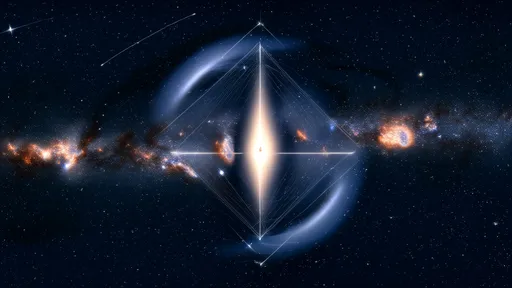
The astronomical context provides a plausible source for the initial chiral trigger. Circularly polarized light is not a laboratory curiosity; it is abundant in the universe. Regions of star formation, reflections from interstellar dust clouds, and synchrotron radiation from neutron stars are all known to generate significant degrees of circular polarization. It is conceivable that chiral organic molecules, such as those found on meteorites, could have been exposed to such light during their journey through space or after delivery to the early Earth. This exposure could have imprinted a slight enantiomeric excess, which then served as the seed for further amplification in prebiotic chemical environments.
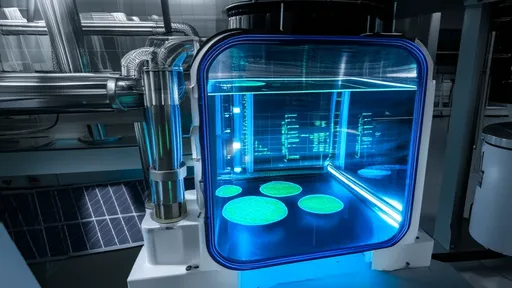
Laboratory experiments have successfully demonstrated the feasibility of this entire pathway. Researchers have irradiated racemic mixtures of amino acids with circularly polarized light and recorded the induction of a small but measurable enantiomeric excess. Subsequent subjection of these slightly enriched mixtures to conditions simulating prebiotic evaporation, condensation, or crystallization often results in significant further enrichment. These experiments effectively create a miniature narrative of how extraterrestrial chiral influence could have been captured, preserved, and magnified on the early Earth.
Beyond autocatalysis, other amplification mechanisms likely played a role. The physical process of crystallization, for instance, is notorious for its ability to purify chirality. In a solution with a slight enantiomeric excess, the preferred enantiomer may crystallize out first, leaving the undesired one in solution. Repeated cycles of dissolution and recrystallization can lead to virtually complete chiral purity. The combination of a photochemical initial step with such a physical amplification mechanism creates a robust and multi-stage pathway from racemicity to homochirality.
The polarization-driven asymmetry amplification model elegantly bridges the gap between a universal physical phenomenon and a fundamental biological imperative. It provides a non-biological, yet deterministic, explanation for the break in symmetry that defines life's molecular architecture. This mechanism does not require improbable scenarios; instead, it leverages common astrophysical processes and well-understood chemical principles. It suggests that the handedness of life on Earth—whether it uses L-amino acids and D-sugars—may not be a random accident but could have been dictated by the prevailing handedness of polarized light that bathed our region of the galaxy during a critical period of prebiotic chemistry.
In conclusion, the journey from a racemic mixture of prebiotic molecules to the homochiral foundation of life is a story of amplification. The chiral vector provided by circularly polarized light, acting as a subtle but persistent external influence, can provide the initial push. This tiny deviation from symmetry is then seized upon and magnified exponentially by powerful chemical and physical processes like autocatalysis and crystallization. Together, they form a coherent and persuasive narrative for the origin of biomolecular homochirality, turning a cosmic asymmetry into a biological certainty.
By /Aug 25, 2025
By /Aug 25, 2025

By /Aug 25, 2025

By /Aug 25, 2025
By /Aug 25, 2025

By /Aug 25, 2025
By /Aug 25, 2025

By /Aug 25, 2025
By /Aug 25, 2025
By /Aug 25, 2025
By /Aug 25, 2025

By /Aug 25, 2025

By /Aug 25, 2025

By /Aug 25, 2025

By /Aug 25, 2025
By /Aug 25, 2025

By /Aug 25, 2025

By /Aug 25, 2025

By /Aug 25, 2025
By /Aug 25, 2025
