Precision Orchard Management Guided by AI Vision-based Pollination System

Aug 25, 2025 By

In the heart of modern agriculture, a quiet revolution is unfolding as artificial intelligence begins to reshape age-old farming practices. Among the most promising advancements is the development of AI-driven visual guidance systems for mechanical pollination in orchards, a technology poised to address one of nature's most delicate and vital processes. As global food demands intensify and pollinator populations face alarming declines, the integration of sophisticated machine vision and intelligent robotics offers a beacon of hope for sustainable and efficient fruit production.

The concept of mechanical pollination is not entirely new; for decades, researchers and farmers have experimented with various methods to supplement or replace natural pollinators. However, early attempts often fell short due to imprecision, inefficiency, and high costs. Traditional mechanical systems lacked the finesse required to mimic the targeted approach of bees and other insects, frequently resulting in wasted pollen, uneven fruit set, and suboptimal yields. It is only with the recent convergence of high-resolution imaging, powerful algorithms, and agile robotics that precision mechanical pollination has become a tangible reality.

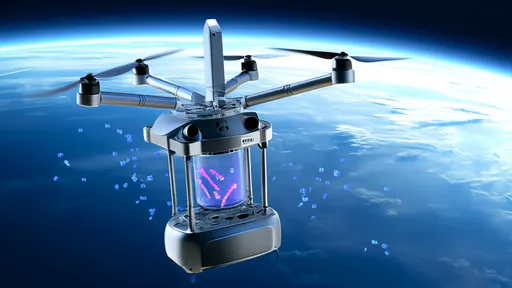
At the core of this new system lies a sophisticated AI vision platform. Equipped with multispectral and high-definition cameras, these systems mounted on autonomous ground vehicles or drones perform continuous sweeps of the orchard. They don't just capture images; they perceive the orchard in immense detail. The AI algorithms are trained on vast datasets of floral imagery, learning to identify individual blossoms, assess their developmental stage—from closed bud to fully open flower—and even determine their viability for pollination. This real-time floral census is the first critical step toward precision management.

The true intelligence of the system is demonstrated in its decision-making capabilities. For each identified flower, the AI makes a series of rapid calculations. It considers the flower's species, its precise location within the canopy, its receptivity (often inferred from petal orientation and color), and its proximity to other flowers. This allows the system to build a dynamic, three-dimensional map of the orchard's pollination needs. It can prioritize flowers that are at their peak receptivity, ensuring the highest possible success rate for pollen transfer. This level of granular decision-making far surpasses the blanket approach of earlier technologies.

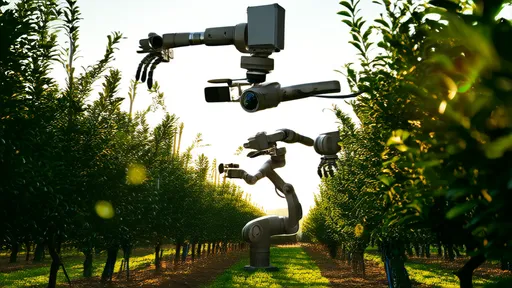
Once the AI has mapped and prioritized its targets, it coordinates a fleet of precision pollination robots. These robots, which can range from robotic arms on mobile platforms to specialized aerial drones, are guided with remarkable accuracy to each designated flower. Using the coordinates provided by the vision system, a robotic appendage equipped with a micro-dispenser delicately approaches the blossom. The dispenser, which might use a gentle puff of air, a tiny droplet of liquid, or a soft microfiber tip, applies a minuscule and exact amount of pollen directly to the flower's stigma. This surgical precision minimizes pollen waste, a significant cost factor, and maximizes the effectiveness of each application.

The benefits of such a system extend far beyond simple automation. Precision is the foremost advantage. By targeting only receptive flowers, growers can achieve a more uniform fruit set, leading to higher-quality harvests with fruits that are more consistent in size and maturity. This is particularly valuable for high-value crops like apples, almonds, and cherries. Furthermore, the system provides unparalleled data. Farmers receive detailed analytics on bloom density, pollination rates, and predicted yields for different sections of their orchard, enabling them to make informed decisions about resource allocation and management practices long after the pollination window has closed.

Perhaps the most significant impact of AI-guided mechanical pollination is its potential for enhancing agricultural resilience. With natural pollinator populations under threat from habitat loss, pesticides, and climate change, this technology offers a reliable and controllable alternative. It ensures that pollination can occur regardless of weather conditions—be it wind, rain, or unseasonable cold—that would otherwise keep natural pollinators grounded. This reliability is crucial for stabilizing food production in an increasingly unpredictable climate.

Looking ahead, the potential for these systems is boundless. Future iterations may incorporate even more advanced sensors to assess plant health and nutrient status alongside flower mapping, creating a holistic orchard management tool. Integration with other farm management software could enable fully autonomous, data-driven farming cycles. As the technology matures and becomes more accessible, it has the potential to democratize precision agriculture, allowing orchards of all sizes to boost productivity and sustainability.

In conclusion, the emergence of AI vision-guided mechanical pollination systems represents a paradigm shift in orchard management. It moves agriculture from a practice of broad-stroke interventions to one of nuanced, plant-by-plant care. By marrying the pattern-recognition prowess of artificial intelligence with the precision of modern robotics, this technology is not merely replacing a natural process but augmenting it with unprecedented levels of control and insight. It stands as a powerful testament to how technology, when thoughtfully applied, can work in harmony with nature to secure our food future.

Recommend Posts
Science

The Origin of Chiral Molecules: Amplification Mechanisms of Asymmetry in Polarized Light Synthesis

By /Aug 25, 2025

The origin of biological homochirality remains one of the most profound mysteries at the intersection of chemistry, physics, and biology. While most biochemical molecules exist in two mirror-image forms, life on Earth overwhelmingly prefers one—a phenomenon known as homochirality. The question of how this uniform handedness emerged from an ostensibly racemic prebiotic world has puzzled scientists for decades. Among the various hypotheses proposed, the amplification of asymmetry through polarized light synthesis presents a particularly elegant and experimentally supported mechanism.
Science

Gravitational Wave Cosmology: A Precision Revolution in Standard Candle Distance Measurement

By /Aug 25, 2025

In the silent darkness between stars, a new astronomy was born on September 14, 2015, when LIGO’s twin detectors registered a chirp—a whisper from two black holes colliding a billion light-years away. That moment didn’t just open a new window on the universe; it quietly set in motion a revolution in how we measure cosmic distances. For decades, astronomers have relied on standard candles—familiar objects like Cepheid variables and Type Ia supernovae—to gauge the scale of the universe. But now, gravitational waves are emerging as a powerful new ruler, one that requires no assumptions about brightness or chemistry, only the immutable laws of general relativity.
Science

Turbulent Machine Learning: Deep Learning-Assisted Prediction of Vortex Dynamics

By /Aug 25, 2025

In the ever-evolving landscape of fluid dynamics research, a groundbreaking convergence is taking place between traditional turbulence modeling and cutting-edge artificial intelligence. The integration of machine learning, particularly deep learning techniques, is revolutionizing how scientists approach the complex challenge of vortex dynamics prediction. This synergy represents more than just another computational tool—it's fundamentally reshaping our understanding of turbulent flows and their behavior in both natural and engineered systems.
Science

Topological Photonic Devices: Breakthroughs in Integrated Platforms for Quantum Computing

By /Aug 25, 2025

In a quiet laboratory at the intersection of quantum optics and materials science, a research team has just shattered previous limitations in photonic quantum computing. Their work on topological photonic devices, published this week in Nature Photonics, demonstrates an unprecedented level of integration and stability that could finally push quantum computing from theoretical promise into practical reality.
Science

Microalgae Protein Reactors: High-Value Utilization of Wastewater Nutrient Transformation

By /Aug 25, 2025

The global push for sustainable protein sources has led researchers to explore unconventional yet remarkably efficient biological systems. Among these, microalgae photobioreactors have emerged as a particularly promising technology, not merely for their protein production capabilities but for their unique dual function in wastewater treatment and resource valorization. This innovative approach represents a paradigm shift in how we view both waste management and food production, transforming environmental challenges into economic opportunities.
Science

Neutrinoless Double Beta Decay: Coherent Scattering Experiments in Underground Laboratories

By /Aug 25, 2025

Deep beneath the Earth’s surface, in laboratories shielded from cosmic interference, a quiet revolution is unfolding in the search for one of the most elusive particles in the universe—the sterile neutrino. For decades, the Standard Model of particle physics has stood as a robust framework, yet tantalizing anomalies in neutrino oscillation experiments have hinted at the existence of this ghostly fourth neutrino, one that does not interact via the weak force. Now, a new generation of experiments using coherent elastic neutrino-nucleus scattering (CEνNS) is bringing us closer than ever to confirming or ruling out its existence.
Science

Precision Orchard Management Guided by AI Vision-based Pollination System

By /Aug 25, 2025

In the heart of modern agriculture, a quiet revolution is unfolding as artificial intelligence begins to reshape age-old farming practices. Among the most promising advancements is the development of AI-driven visual guidance systems for mechanical pollination in orchards, a technology poised to address one of nature's most delicate and vital processes. As global food demands intensify and pollinator populations face alarming declines, the integration of sophisticated machine vision and intelligent robotics offers a beacon of hope for sustainable and efficient fruit production.
Science

Electrochemical Remediation of Saline-Alkali Soils: Pulsed Electric Field-Driven Ion Migration Engineering

By /Aug 25, 2025

The global challenge of soil salinization has long plagued agricultural productivity and ecological balance, with vast tracts of arable land rendered barren due to excessive salt accumulation. Traditional remediation methods, ranging from physical leaching to chemical amendments and biological interventions, have yielded mixed results, often constrained by high costs, environmental side effects, or limited scalability. In recent years, however, a novel approach has emerged from the intersection of electrochemistry and environmental engineering: pulsed electric field-driven ion migration for saline-alkali soil reclamation. This innovative technique harnesses precisely controlled electrical pulses to manipulate salt ions, offering a targeted, efficient, and potentially sustainable solution to one of agriculture's most persistent problems.
Science

Genetic Editing of Tropical Crops: Field Verification of Virus-Resistant Cocoa

By /Aug 25, 2025

In the heart of West Africa's cocoa belt, a quiet revolution is taking root. For generations, farmers have watched helplessly as swollen shoot virus, a relentless pathogen, decimated their crops and livelihoods. Now, field trials for a genetically edited, virus-resistant cocoa variety are showing promise that could transform the entire industry. This isn't just another laboratory experiment; it's a real-world application of cutting-edge science meeting urgent agricultural need.
Science

Root System Laser Scanning: Non-Invasive 3D Imaging of Soil Structure

By /Aug 25, 2025

In the evolving landscape of agricultural and environmental sciences, the ability to visualize and analyze soil structure without causing disruption has long been a sought-after capability. Traditional methods of soil analysis, while informative, often involve extraction and laboratory processing that alter the very fabric of the sample, potentially skewing results and limiting understanding. A transformative approach is now gaining traction, offering a window into the hidden world beneath our feet: non-invasive 3D imaging of soil architecture through root system laser scanning.
Science

Piezoelectric Smart Infrastructure: Distributed Harvesting of Traffic Vibration Energy

By /Aug 25, 2025

The hum of traffic, once considered mere urban noise, is now being reimagined as a vital energy resource. Across the globe, researchers and engineers are tapping into the kinetic energy generated by vehicles, trains, and even pedestrians, transforming the very infrastructure that supports modern civilization into a distributed network of power generators. This paradigm shift is powered by piezoelectric technology, a concept that converts mechanical stress—such as vibrations from movement—into electrical energy. The implications are profound, offering a path to more sustainable, self-powered smart cities.
Science

Urban Air Traffic Network: 3D Airway Management for Drone Swarms

By /Aug 25, 2025

The hum of rotors echoes through the canyons of glass and steel as the first commercial drone swarm navigates its pre-dawn delivery route. This is no longer the stuff of science fiction but the emerging reality of urban air mobility. Across global megacities, from Singapore to Dubai, London to Los Angeles, the race is on to develop the most sophisticated and safe three-dimensional traffic management systems for what promises to be a revolution in how we move goods and people. The sheer complexity of managing hundreds, potentially thousands, of unmanned aerial vehicles (UAVs) in densely populated airspace represents one of the most significant technological and logistical challenges of the 21st century.
Science

Green Ammonia-Powered Shipping: Breakthrough in Chemical Hydrogen Storage Technology for Zero-Carbon Vessels

By /Aug 25, 2025

The maritime industry stands at a pivotal crossroads, with the urgent need to decarbonize driving unprecedented innovation in propulsion technologies. Among the most promising developments is the emergence of green ammonia as a viable zero-carbon fuel, representing a significant breakthrough in chemical hydrogen storage for shipping. This advancement is not merely an incremental improvement but a potential game-changer for one of the hardest-to-abate sectors of the global economy.
Science

Autonomous Icebreaking Navigation: A Multimodal Ice Prediction System for Arctic Routes

By /Aug 25, 2025

In the frigid expanse of the Arctic, a technological revolution is quietly unfolding, one that promises to reshape global maritime trade and navigation. The development of autonomous ice-breaking navigation, powered by sophisticated multimodal ice condition prediction systems, represents a leap forward in our ability to conquer one of Earth's most challenging environments. This innovation is not merely an incremental improvement but a fundamental shift in how vessels traverse the polar regions, blending cutting-edge artificial intelligence, satellite monitoring, and oceanic data analytics into a cohesive, life-like decision-making framework.
Science

Aerodynamic Optimization of Vacuum Maglev Logistics: Intercity Capsule Transportation System

By /Aug 25, 2025

In a groundbreaking development that promises to redefine the future of transportation, engineers and researchers have achieved a significant breakthrough in the aerodynamic optimization of vacuum maglev logistics systems, specifically designed for intercity capsule transport. This innovation addresses one of the most critical challenges in high-speed vacuum tube travel: minimizing air resistance to achieve unprecedented efficiency and speed. The implications for global logistics, urban connectivity, and sustainable transport are profound, potentially heralding a new era where goods and people move between cities at near-supersonic speeds with minimal energy consumption.
Science

Stratospheric Biological Sampling: Study on Microbial Gene Drift at 20-Kilometer Altitude

By /Aug 25, 2025

In the rarefied air of the stratosphere, twenty kilometers above Earth's surface, a quiet revolution in microbiology is unfolding. For decades, scientists considered this atmospheric layer a near-sterile boundary, a buffer zone between the tropospheric weather systems below and the cosmos beyond. Recent advances in high-altitude sampling technology, however, have shattered this assumption, revealing a surprising diversity of microbial life drifting on global air currents. The discovery of these resilient communities has ignited a fascinating new field of study: stratospheric microbial gene flow, a process that may fundamentally alter our understanding of global genetic exchange, ecological resilience, and even the origins of life itself.
Science

Desert Biomimetic Water Harvester: Optimization of Air-Water Capture with Multi-Scale Structures

By /Aug 25, 2025

In the relentless expanse of the world's arid regions, the scarcity of fresh water is a constant and formidable challenge. Traditional water sourcing methods often fall short, proving either too energy-intensive or entirely infeasible. However, a beacon of innovation is emerging from an unlikely source: the natural world itself. Scientists and engineers are turning to the ingenious survival strategies of desert-dwelling organisms to develop a new generation of technology. This field, known as biomimicry, has yielded a particularly promising device: the desert biomimetic water harvester, a system designed to optimize atmospheric water capture through multi-scale structural engineering.
Science

Volcanic Lava Sensor: Extreme Environment Monitoring with Silicon Carbide Chips

By /Aug 25, 2025

In the shadow of restless volcanoes, where the very air shimmers with heat and the ground trembles with pent-up fury, a quiet technological revolution is unfolding. For decades, monitoring these extreme environments meant relying on instruments with severe limitations—ones that would falter, melt, or fail just as the volcanic activity reached its most critical phase. The need for robust, reliable sensing technology in such infernal conditions has long been a paramount challenge for volcanologists and engineers alike. Today, that challenge is being met not by incremental improvements, but by a fundamental shift in material science, centered on a remarkable substance: silicon carbide.
Science

Genome Sequencing of a 5-Million-Year Isolated Ecosystem Under Antarctic Ice

By /Aug 25, 2025

Deep beneath the Antarctic ice sheet, where darkness and extreme cold have persisted for millions of years, scientists have uncovered a hidden world that challenges our understanding of life’s resilience. In one of the most ambitious and technologically demanding research endeavors of the decade, an international team has successfully sequenced genetic material from microorganisms isolated in a subglacial lake for an estimated five million years. This extraordinary discovery not only sheds light on the adaptability of life in one of Earth’s most hostile environments but also carries profound implications for the search for extraterrestrial life on icy moons like Europa and Enceladus.
Science

Deep-sea Hydrothermal Electron Transfer: Energy Exchange Networks of Chemosynthetic Microorganisms

By /Aug 25, 2025

In the perpetual darkness of the deep ocean, where pressures crush and temperatures swing from near-freezing to scalding extremes, life not only persists but thrives in one of Earth’s most enigmatic ecosystems: hydrothermal vents. Here, in the absence of sunlight, a complex web of energy exchange unfolds, driven by chemosynthetic microorganisms. These remarkable life forms have mastered the art of harvesting energy from inorganic chemicals, forming the foundational layer of a food web that supports diverse and unique organisms. Central to their survival and function is a process known as extracellular electron transfer, a sophisticated mechanism that allows microbes to interact with their mineral-rich environment, exchanging electrons to power their metabolism.