In the frigid expanse of the Arctic, a technological revolution is quietly unfolding, one that promises to reshape global maritime trade and navigation. The development of autonomous ice-breaking navigation, powered by sophisticated multimodal ice condition prediction systems, represents a leap forward in our ability to conquer one of Earth's most challenging environments. This innovation is not merely an incremental improvement but a fundamental shift in how vessels traverse the polar regions, blending cutting-edge artificial intelligence, satellite monitoring, and oceanic data analytics into a cohesive, life-like decision-making framework.
The core of this advancement lies in the multimodal prediction system itself, an intricate network that processes diverse data streams in real-time. Unlike traditional models that might rely on单一 satellite imagery or historical ice charts, this system synthesizes information from synthetic aperture radar, infrared sensors, buoy networks, and even underwater sonar arrays. By cross-referencing these inputs, it constructs a dynamic, three-dimensional map of ice thickness, density, movement patterns, and potential hazards. This holistic view allows vessels to anticipate changes hours or even days in advance, adjusting routes proactively rather than reacting to dangers as they arise.
What sets this technology apart is its autonomy. The system doesn't just provide data; it interprets it, making navigational decisions with a precision that rivals human expertise but operates with machine consistency. Through machine learning algorithms trained on decades of Arctic voyage data, it recognizes patterns invisible to the naked eye—subtle shifts in ice floe cohesion, pressure ridge formations, and the influence of subsurface currents. This capability enables vessels to identify not only the safest path but also the most fuel-efficient one, optimizing speed and power usage to minimize environmental impact and operational costs.
The implications for the Northern Sea Route and other Arctic passages are profound. As climate change continues to reduce summer ice cover, these waterways are becoming increasingly accessible, offering a shortcut between Europe and Asia that can slash transit times by weeks compared to traditional routes via the Suez or Panama Canals. However, this accessibility comes with risks—unpredictable ice conditions, sudden storms, and the sheer remoteness of the region. Autonomous ice-breaking navigation mitigates these risks, providing a level of safety and reliability previously unattainable.
Beyond commercial shipping, this technology holds promise for scientific research and environmental monitoring. Research vessels equipped with these systems can navigate closer to ice shelves and glaciers, collecting data in regions that were once too hazardous to approach regularly. This could accelerate our understanding of climate change impacts, ice melt dynamics, and Arctic ecosystems. Moreover, the same predictive capabilities can be applied to search and rescue operations, helping planners avoid dangerous ice conditions during missions.
Yet, the development of such systems is not without challenges. The Arctic environment is notoriously harsh on equipment, with extreme cold, ice accumulation, and limited satellite connectivity in high latitudes posing significant hurdles. Engineers have had to develop hardened sensors and redundant communication systems to ensure continuous operation. Data latency is another critical issue; even slight delays in transmitting information can render ice predictions obsolete. To combat this, edge computing solutions process data directly on the vessel or on nearby platforms, reducing reliance on distant servers.
Ethical and regulatory considerations also loom large. As autonomous systems take on more decision-making responsibilities, questions arise about liability in the event of an accident and the need for international standards governing their use. The Arctic is a fragile environment, and increased shipping activity—even with advanced navigation—could pose threats to wildlife and indigenous communities. Proponents argue that these systems, by optimizing routes and reducing human error, actually minimize environmental risks compared to conventional navigation.
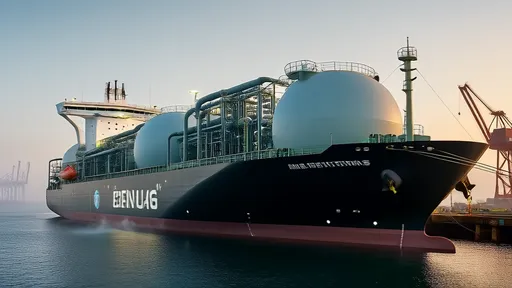
Looking ahead, the integration of this technology with other emerging innovations could unlock further possibilities. Imagine vessels that not only predict ice conditions but also actively modify them, using directed energy or other non-invasive methods to clear minor obstacles. Coupled with renewable energy sources like advanced nuclear reactors or hydrogen fuel cells, such ships could operate with near-zero emissions, addressing both navigation and sustainability goals simultaneously.
In conclusion, the advent of autonomous ice-breaking navigation and multimodal prediction systems marks a pivotal moment in maritime history. It embodies a harmonious blend of human ingenuity and technological prowess, turning the treacherous Arctic into a viable corridor for global trade and discovery. As these systems evolve, they will not only enhance economic opportunities but also deepen our respect and understanding of the polar realms, reminding us that true progress lies not in conquering nature, but in learning to navigate its complexities with wisdom and foresight.

By /Aug 25, 2025

By /Aug 25, 2025
By /Aug 25, 2025

By /Aug 25, 2025
By /Aug 25, 2025
By /Aug 25, 2025
By /Aug 25, 2025
By /Aug 25, 2025

By /Aug 25, 2025
By /Aug 25, 2025
By /Aug 25, 2025

By /Aug 25, 2025
By /Aug 25, 2025

By /Aug 25, 2025
By /Aug 25, 2025
By /Aug 25, 2025

By /Aug 25, 2025

By /Aug 25, 2025
By /Aug 25, 2025

By /Aug 25, 2025
