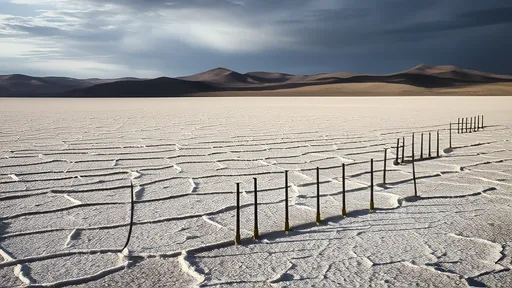
In the relentless expanse of the world's arid regions, the scarcity of fresh water is a constant and formidable challenge. Traditional water sourcing methods often fall short, proving either too energy-intensive or entirely infeasible. However, a beacon of innovation is emerging from an unlikely source: the natural world itself. Scientists and engineers are turning to the ingenious survival strategies of desert-dwelling organisms to develop a new generation of technology. This field, known as biomimicry, has yielded a particularly promising device: the desert biomimetic water harvester, a system designed to optimize atmospheric water capture through multi-scale structural engineering.
The core principle behind this technology is deceptively simple: extract life-sustaining moisture directly from the air. While the concept of atmospheric water generation is not new, its efficiency in the extremely dry conditions of a desert has historically been abysmal. The air may contain water vapor, but coaxing it into a liquid state with minimal energy input is the true hurdle. This is where nature's millennia of evolutionary refinement provide the blueprint. Certain beetles, cacti, and grasses have evolved breathtakingly efficient mechanisms to harvest fog and dew, surviving in environments where rain may not fall for years.
Take, for instance, the Namib Desert beetle (Stenocara gracilipes). This remarkable insect raises its textured back into the early morning fog. Its shell is not a uniform surface; it is a masterclass in material science. The shell features hydrophilic (water-attracting) bumps surrounded by hydrophobic (water-repelling) channels. Microscopic water droplets from the fog preferentially condense on the bumps. Once they grow large enough, they overcome the surface tension and are effortlessly channeled by the waxy, hydrophobic regions directly towards the beetle's waiting mouthparts. It is a passive, zero-energy system of exquisite precision.
Inspired by this, researchers have moved beyond simple imitation. The modern desert biomimetic harvester is a feat of multi-scale optimization, meaning its design is intentionally complex across different size scales—from the macroscopic shape down to the nanoscopic texture. At the macro-scale, the overall form of the harvester is crucial. Much like the spines of a cactus, which are perfectly angled to condense and direct moisture, collectors are often shaped into cones, ridges, or arrays of spines. These forms are engineered to maximize surface area exposure to prevailing winds and to facilitate the gravitational flow of collected water into a central reservoir, minimizing re-evaporation.
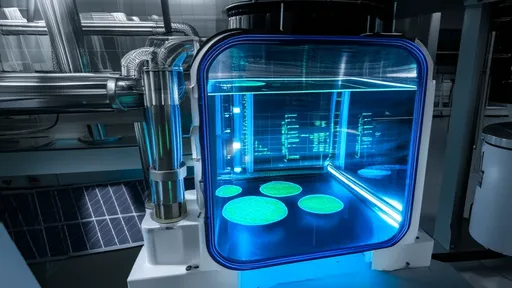
The real magic, however, happens at the micro- and nano-scale. This is where synthetic biology and materials engineering converge. The surface of these collectors is not smooth; it is meticulously textured with a forest of micropillars, nanowires, or a porous hydrogel matrix. These textures are engineered to mimic the beetle's shell, creating a stark contrast between water-nucleating sites and water-shedding pathways. Advanced materials like metal-organic frameworks (MOFs) are being integrated into these designs. MOFs are incredibly porous crystalline structures with a massive internal surface area—a single gram can have the surface area of a football field. These pores act as microscopic traps, aggressively pulling water molecules from the air, even at very low humidity levels, and releasing them with a small input of heat, often supplied passively by the sun.
The integration of these scales is what defines the optimization process. A brilliant macro-structure is useless without a micro-texture that effectively captures and releases water. Conversely, a powerful nano-material like a MOF must be supported by a macro-structure that allows for ample air flow, efficient solar heating, and clean water delivery. Computational fluid dynamics and advanced modeling are used to simulate countless iterations of this interplay, seeking the perfect synergy between form and function for a specific climatic condition.
The potential impact of this technology extends far beyond a scientific curiosity. For remote desert communities, a robust, passive water harvester could fundamentally alter daily life. It could reduce dependence on unreliable or contaminated groundwater sources and eliminate the energy costs associated with long-distance transportation or desalination. These systems are designed to be off-grid, requiring no electricity, making them ideal for humanitarian aid and sustainable development projects in the world's most water-stressed regions.
Furthermore, the environmental implications are profoundly positive. Unlike large-scale desalination plants, which discharge concentrated brine back into oceans, harming marine ecosystems, atmospheric water harvesters have a minimal environmental footprint. Their operation is silent and produces no waste byproducts. They represent a truly sustainable closed-loop system, tapping into the vast, natural hydrological cycle without depleting terrestrial or aquatic resources.
Of course, the path from laboratory prototype to widespread deployment is not without obstacles. Current research is fiercely focused on enhancing yield, particularly during the day and in the driest seasons. Durability is another critical frontier; these surfaces must resist degradation from ultraviolet radiation, wind-blown sand abrasion, and dust contamination, which can clog nano-pores and destroy hydrophobicity. The quest is also on for cheaper, more abundant materials to replace expensive synthesized compounds, bringing the technology within economic reach of those who need it most.
Despite these challenges, the progress is undeniable. What began as an observation of a humble beetle on a desert dune is rapidly evolving into a sophisticated, scalable solution to one of humanity's oldest struggles. The desert biomimetic water harvester stands as a powerful testament to the idea that the solutions to our greatest challenges are often hidden in plain sight, honed by nature over eons. It is a perfect marriage of biology and technology, offering a glimpse into a future where innovation draws from the wisdom of the natural world to create a more resilient and water-secure world for all.

By /Aug 25, 2025

By /Aug 25, 2025

By /Aug 25, 2025

By /Aug 25, 2025
By /Aug 25, 2025

By /Aug 25, 2025
By /Aug 25, 2025
By /Aug 25, 2025
By /Aug 25, 2025
By /Aug 25, 2025

By /Aug 25, 2025

By /Aug 25, 2025

By /Aug 25, 2025

By /Aug 25, 2025

By /Aug 25, 2025
By /Aug 25, 2025

By /Aug 25, 2025

By /Aug 25, 2025

By /Aug 25, 2025

By /Aug 25, 2025
